This article first appeared in Livewire on 2 June 2026
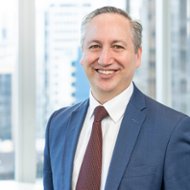
Investors are currently navigating a world defined by five formidable factors: high inflation, the AI revolution, consumer fragility, heavy regulation, and geopolitical uncertainty. For James Abela, Portfolio Manager of the Fidelity Future Leaders Fund and Co-Portfolio Manager of the Fidelity Global Future Leaders Fund & Active ETF (ASX:FCAP), this environment has created a distinct fragmentation between "AI leadership," "non-AI" businesses protected by deep trust, and a growing rump of "AI losers."
While the market's gaze is fixed on the horizon, the ground beneath quality stocks has shifted, delivering the toughest period of performance since the lead-up to the GFC. But as the saying goes, “it’s always darkest before dawn.” In this episode of The Rules of Investing, James Abela explains why it is critical to have a process for navigating challenging markets, and highlights the bright spots, both globally and on the ASX, that are presenting a breadth of opportunities in small and mid-cap companies.
Interview recorded on 26 May 2026
Quality’s worst run since before the GFC
The "Quality" factor - traditionally defined by Abela as companies sustaining a return on equity (ROE) of 11-12%, roughly 2-3% above the Australian market average, has faced a brutal two-year period of underperformance.
Abela attributes this primarily to the "shortening of duration" caused by AI.
"AI has shortened the certainty and increased the expectation of capex or innovation in order to sustain leadership," Abela explains.
This has led to dramatic multiple compression for software and information-heavy businesses that the market now views as "AI losers".
For investors feeling the sting of underperformance, Abela offers three pillars for managing through the cycle:
- Don’t Break the Process: Whether you are a value, momentum, or quality manager, you must stick to your core process.
- Differentiate the "Cracks": Quality fails when it meets the three Cs: Competition, Capex, and Complacency. If AI introduces permanent competition or requires massive new spending, the de-rating is structural, not transient.
- Trim Extremes: Abela admits to trimming quality and software names late last year, where 60-70% of the performance was mere PE re-rating. "When that's too extreme, the risks on the downside are very significant," he notes.
Currently, Abela is finding safety in "non-AI" quality names, businesses where physical innovation or deep human trust provides a moat, such as Fisher & Paykel Healthcare (ASX: FPH), HUB24 (ASX: HUB), and Charter Hall (ASX: CHC).
“One bright spot in my space has been Fisher and Paykel Healthcare, which has been doing really well. It's not AI-affected. It has a deep trust environment - hospitals, critical intensive care or sleep apnoea. So, these are in very critical, deep trust environments."
One global theme, many ways to play it
While the "Magnificent Seven" dominate headlines, Abela is looking at the mid-cap space (companies up to US$100 billion) for the "picks and shovels" of the AI build-out.
Approximately 25-30% of the Fidelity Global Future Leaders strategy is now AI-related, spread across five or six distinct sub-themes.
"It's probably one of the largest thematic exposures we've had when we think about our fund in terms of theme exposures... but the breadth and diversity of that exposure is quite large. We’re not chasing very hot things; we want three-to-five-year visibility," Abela says.
Key holdings include:
-
Comfort Systems (NYSE: FIX): Now the Fidelity Global Future Leaders Fund's number one position, this engineering and construction firm is seeing significant upgrades driven by the physical build of data centres.
-
Lumentum (NASDAQ: LITE): A recent addition specialising in optical technology. As data volumes explode, optical fibre is becoming essential for the speed and volume requirements of data centre junctions.
Abela notes that while these stocks often trade at high multiples (30-40x), the "structure of earnings" is accelerating, with some seeing EPS upgrades in the 70-80% range over the past year.
A shining light on the ASX
Domestically, the Future Leaders portfolio looks remarkably different, characterised by a massive 36% exposure to the materials sector, a level only seen twice before in the last decade during the 2017 recovery and the 2021 lithium bubble.
"Resources is really where the powerhouse of the Australian market is occurring right now," Abela says
Abela says that commodities are filling the gap as the market seeks "short duration" earnings rather than distant growth dreams.
“When the market is very value focused, they do go short duration. They want to see the earnings now, not something in five or 10 years' time."
Key Australian exposures include:
-
Lithium and Copper: Pilbara Minerals (ASX: PLS), IGO (ASX: IGO), and Sandfire Resources (ASX: SFR) remain core holdings to capture the transition and AI-driven energy demand.
-
Quality Survivors: Outside of resources, Abela remains high conviction on HUB24 and Netwealth (ASX: NWL). He views these platforms as systems of "deep trust" where $100 billion of capital relies on their integrity - a moat that software-only businesses may lack in an AI world.
Abela is a self-confessed optimist and while the "AI revolution" is causing a violent dispersion in valuations, he believes the next 12 months will allow the market to delineate between the survivors and the truly disrupted, providing a new entry point for high-quality, innovative leaders.
The "Berkshire" of mid-caps
Abela’s pick if markets were to shut for the next five years is Halma (LON: HLMA), a UK-based global group of life-saving technology companies. He views it as the ultimate defensive growth play because of its unique organisational structure and consistent track record.
"It is well diversified. It does have technology leadership, but it is a bit of a Berkshire Hathaway type business. I’d feel that that’s probably the easiest one in terms of being long duration, it’s got breadth and it has persistence in its return profiles."